
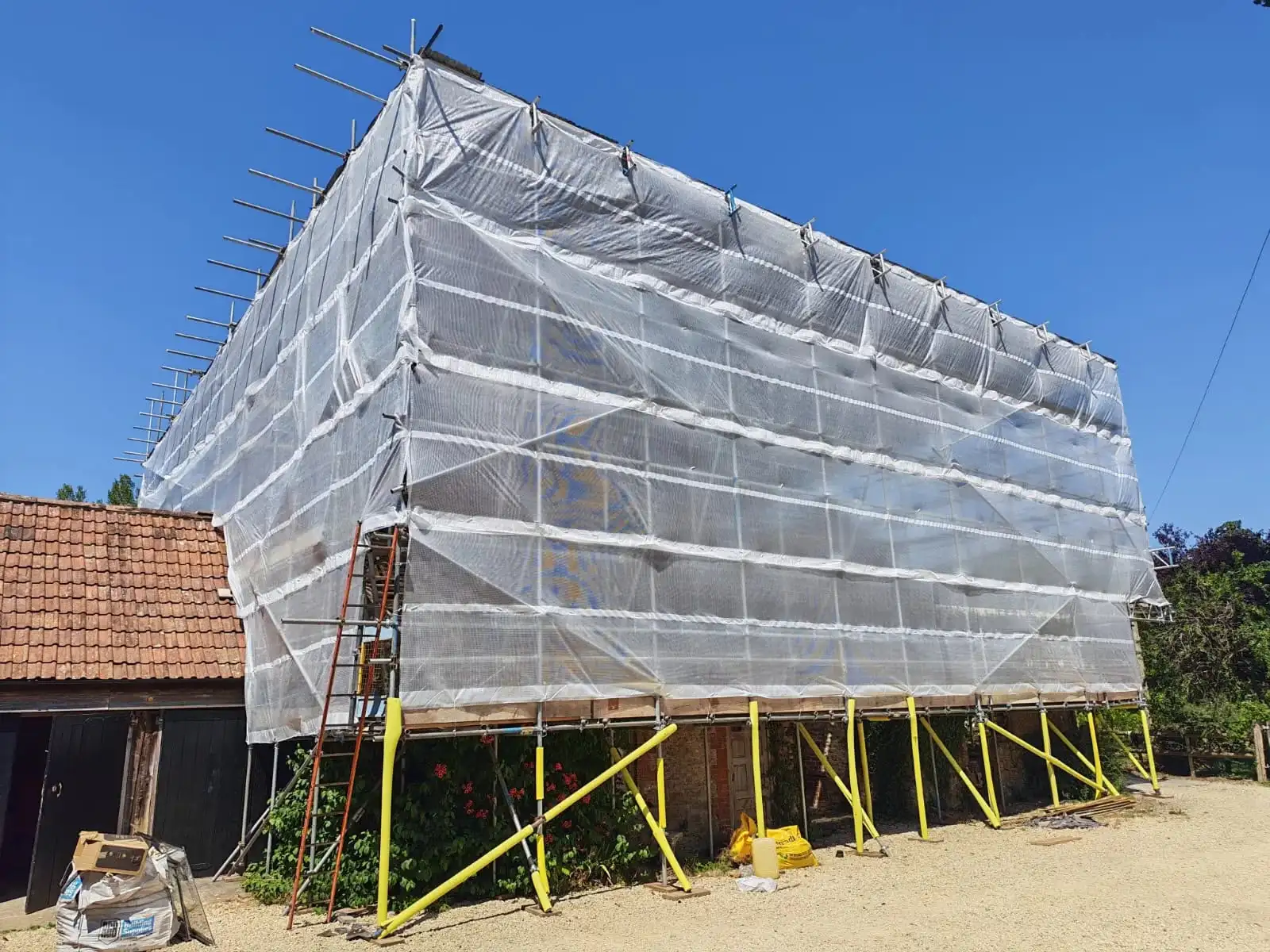
Screen Scaffolding & Protection
Screen Scaffolding & Protection is an access and containment arrangement planned around work that could affect neighbouring property, adjoining trades or public areas. Depending on the design, a screen may help manage light material and weather exposure. It is not a guarantee against structural collapse or every kind of airborne hazard. Up Top Scaffolding welcomes a detailed protection brief for projects in Poole, with the proposed works and screen duty considered together.
- Free QuoteTell us about your project
- Fully InsuredScaffolding cover
Get a Free Quote
UP TOP SCAFFOLDING
Define what the screen must achieve
Start by identifying the risk: small fragments from careful dismantling, dust carried towards an occupied boundary, or weather affecting an open workface. These are different problems and may call for different materials or controls outside the scaffold package. A description such as fully screened is not an engineering specification. The principal contractor should explain the expected activity, the protected receptors and the level of containment required before a scaffold screen is proposed.
Screen Scaffolding & Protection questions, answered.
Straight answers from the Up Top Scaffolding team before you arrange a survey or quote.
Ask us anythingCan a sheeted scaffold contain a building collapse?
A general sheeted scaffold must not be treated as collapse restraint. Any structural restraint or unusual impact duty requires an explicit engineered solution and coordination with the demolition method.
Can sheeting be added after the access scaffold is erected?
Only after the change has been assessed and authorised. The covering may materially change wind forces and tie requirements, even where the platform layout stays the same.
Is screening the same as asbestos containment?
No. Asbestos work needs its own specialist assessment and controls. A scaffold covering does not demonstrate suitable hazardous-material containment or authorise removal work.
Who should report a damaged screen panel?
The site team should report damage promptly to the agreed contact and restrict affected activities where necessary. Do not improvise a repair or remove scaffold components to reach it.
A screened scaffold experiences different forces
Adding a sheet or membrane changes the scaffold's exposure to wind. Openings, returns, height and the distance from the building influence the arrangement. The condition of the retained structure also matters because demolition may remove the very fabric intended to provide ties. Planning therefore needs to consider both the completed screen and intermediate stages. Attaching an extra covering to a scaffold already on hire is not a minor decorative change. Confirm how the specification will be communicated to subcontractors whose activities could damage the covering or change the conditions behind it during the hire period.
Agree design and erection interfaces
At survey stage, Up Top can review the site boundary, access constraints and information supplied by the demolition or refurbishment team. The proposed protection duty should be included in the scaffold brief and referred for appropriate design where required. Erection, fixing of the screen and handover need a controlled sequence. Record permitted loading and any restrictions on nearby operations, then arrange inspection, maintenance access and a checked dismantling sequence as the building changes.
Do not confuse screening with hazardous containment
A general scaffold screen does not establish asbestos containment, acoustic performance or controlled ventilation. Those requirements belong in a specialist plan with suitable evidence, equipment and competent oversight. The screen's connections and escape routes must also remain compatible with other site controls. Discuss how a torn panel, loose fixing or exceptional weather event will be reported, and make sure repairs are carried out by people authorised to work on the scaffold system.
Keep the protection plan current
The screen needs to remain suitable as lifts come out of use and the working face moves. Inspection arrangements should consider damage, severe weather and alterations as well as routine checks. Loose material must be managed at source; screening is not permission to throw rubble against a covering or accumulate debris on platforms. Where the public could be affected, the principal contractor must maintain a wider protection strategy that also controls access, deliveries and the work itself.
Choose the right companion protection
Debris & Protection Fans provide a separate interception duty, while Scaffold Hoarding addresses site separation at ground level. Demolition Contractors can use those distinctions when preparing a coordinated brief. The Sherborne project illustrates coordination between a sheeted temporary roof, working access and structural support. Contact us about sites in Poole, Bournemouth and Christchurch, including the proposed screen extent and neighbouring uses.
Verified Feedback
What Our Clients Say
Read verified reviews from customers across Dorset & Hampshire.