
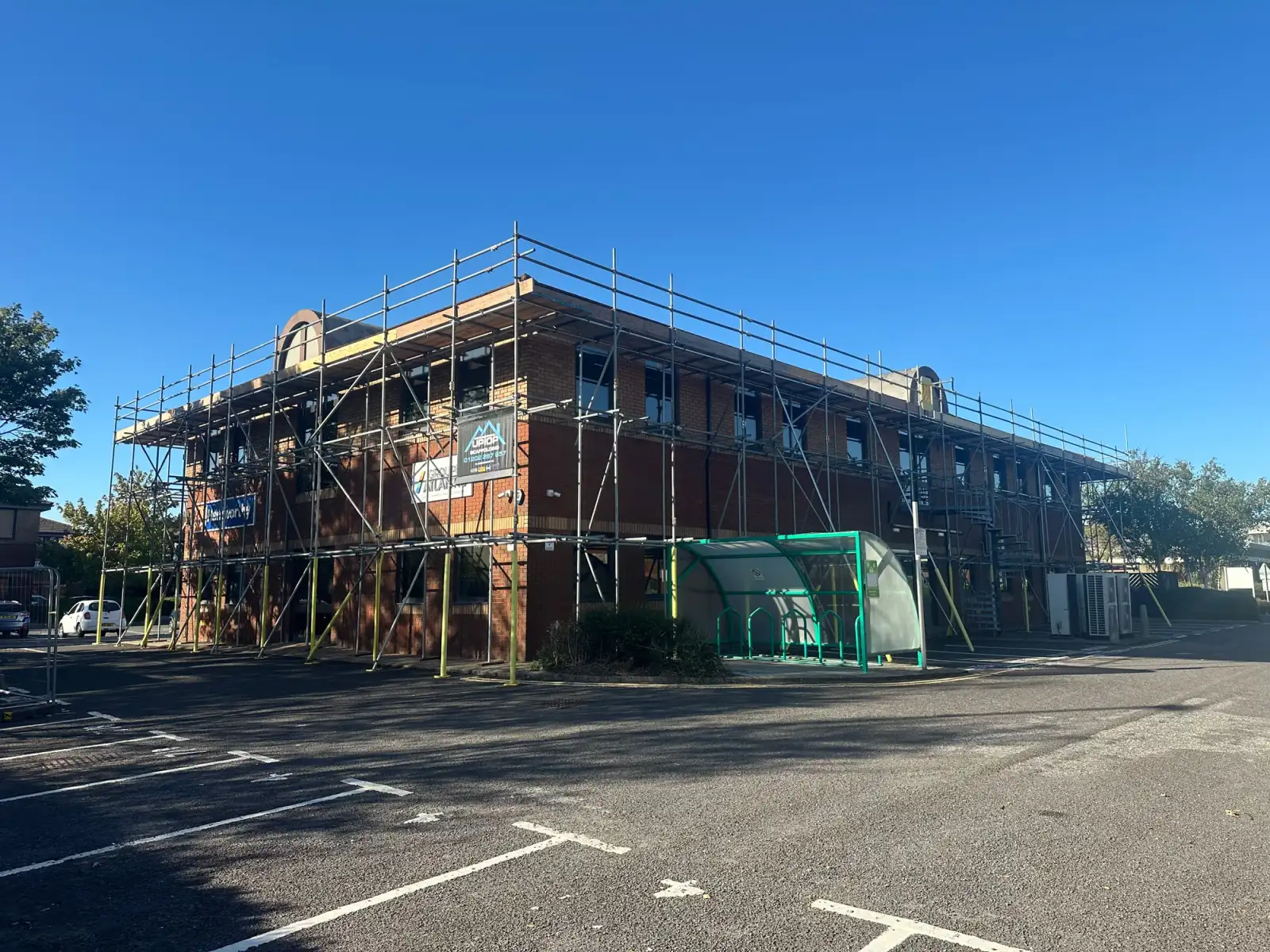
Commercial Scaffolding
Commercial Scaffolding gives trades a working platform around offices, shops, hotels and other business premises. The access has to suit the building and the people using it throughout the works. Up Top Scaffolding works from Poole across Bournemouth, Christchurch and the wider region, helping commercial clients discuss repairs, refurbishment and roof access without overlooking deliveries, entrances or the working day inside.
- Free QuoteTell us about your project
- Fully InsuredScaffolding cover
Get a Free Quote
Access that works around an occupied building
An office repaint, a retail roof repair and a hotel refurbishment place different demands on a scaffold. Survey information should identify opening hours, escape routes, visitor movement and the areas that trades need to reach. A platform positioned for decorating may not be suitable for storing roofing materials. We ask what the scaffold must do, who will use it and which parts of the premises must remain available before the access arrangement is agreed.
Commercial work often needs a phased approach. One elevation may be released before another, while signs, lighting and building services remain in operation. Telling us about planned events or delivery peaks helps identify sensible erection and dismantling windows. A scaffold does not remove the need for the building operator and principal contractor to manage the activities taking place below it.
Commercial Scaffolding questions, answered.
Straight answers from the Up Top Scaffolding team before you arrange a survey or quote.
Ask us anythingCan a shop stay open behind commercial scaffolding?
It may be possible, subject to the access design and the risk assessment. Entrances, escape routes, customer protection and the erection sequence need agreement with the operator before works start.
What should a managing agent send with an enquiry?
Send the work specification, building photographs, proposed dates, occupied areas and any restrictions on deliveries or opening hours. Include the contractor contact so the intended platform use can be checked.
Can commercial scaffold be removed in phases?
Phased removal can be considered when it is planned and does not compromise the remaining structure. Tell us which elevations or entrances need to be released and when.
Does permission from the landlord cover pavement occupation?
Landlord consent and highway permission are separate matters. A scaffold that occupies or projects over public highway space may require authority approval, even when the building owner has agreed to the work.
A clear scope for the survey and quotation
Up Top starts with the work specification, photographs and site access details, then surveys the positions where scaffold loads, ties and deliveries could be accommodated. We discuss any need for temporary roofs, additional working lifts or designated loading areas. The resulting scope should explain the intended access, hire period and any stages or alterations that need separate planning.
For a more complex frontage, bespoke design packages can address the constraints that a standard arrangement cannot cover. Confirming the design route before erection avoids asking trades to work around a platform built for the wrong task. Changes to loading, sheeting or access requirements should be raised with the scaffolding team rather than made by the building user.
From erection to the final handback
The agreed installation sequence should create a segregated work area while components are delivered and the scaffold is erected. Once the completed access is inspected and handed over, users need to understand its loading limits and any restricted areas. Ongoing inspection arrangements, access security and responsibility for requesting changes should be clear to the people managing the premises.
Strike is another commercial operation to programme, not simply the reverse of an unobstructed delivery. We discuss when entrances can be restricted, where materials can be stacked and how the property will be handed back. Our New Fields Business Park project shows existing external commercial access work; its arrangement is an example rather than a specification for another building.
Public access, boundaries and project coordination
Work over a public highway may require permission from the relevant authority, alongside protection for people passing the site. The need depends on the position of the scaffold, not whether the client owns the building. Facilities management teams should also explain alarm systems, cleaning routes and service access that could be affected by scaffold ties or ground-level standards.
Discuss your site with our Poole team, or view coverage in Bournemouth and Christchurch. Bring the contractor programme and a description of occupied areas to the conversation. That gives us a practical starting point for access which supports the works while respecting the everyday use of the property.
Verified Feedback
What Our Clients Say
Read verified reviews from customers across Dorset & Hampshire.