Scaffolding Shrink Wrap
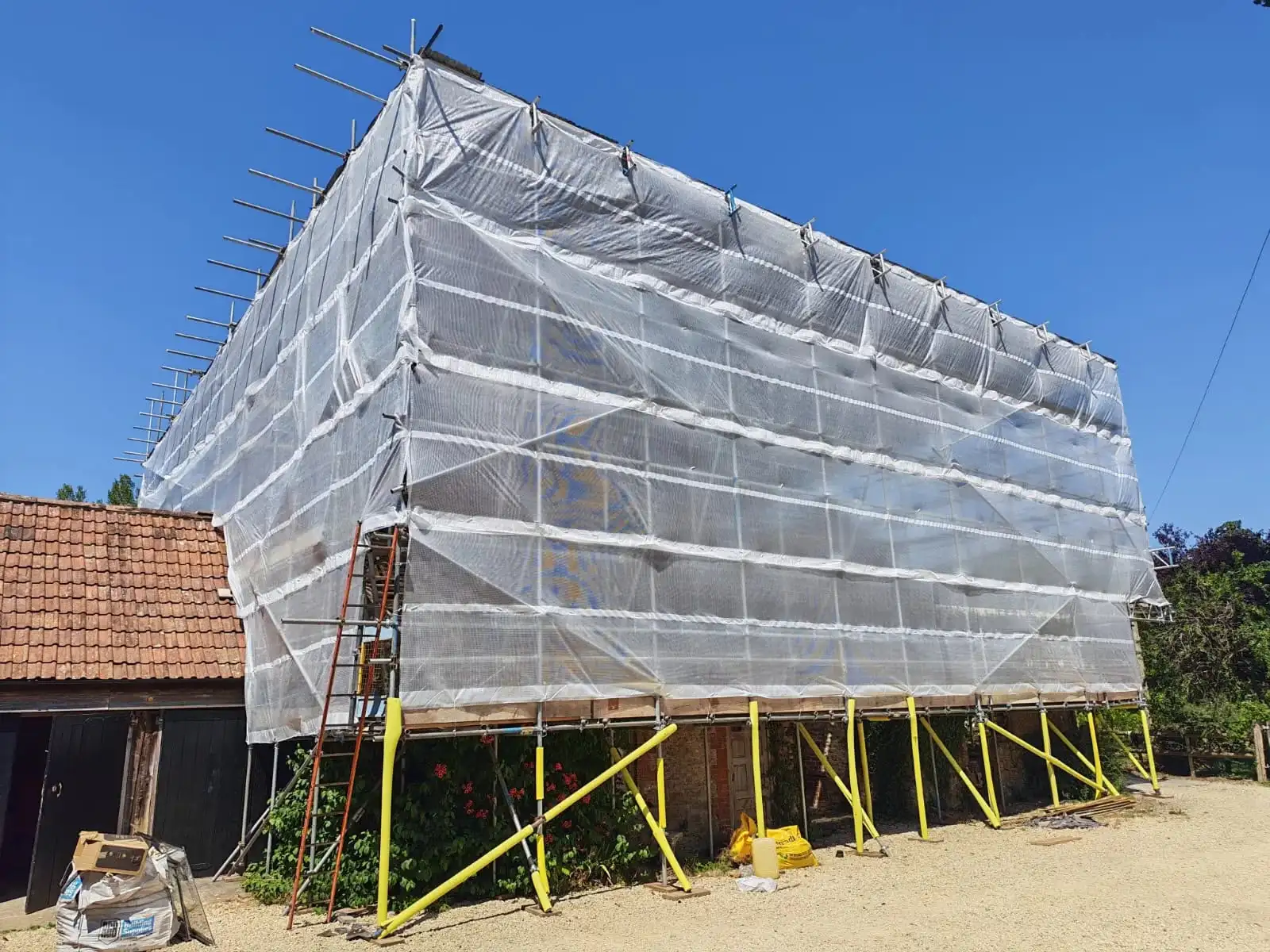
Scaffolding shrink wrap is an enclosure approach using a shrinkable membrane fixed around a suitable scaffold framework. It may be considered where a refurbishment needs a close-fitting external covering rather than an open scaffold. Discuss the intended work and protection with Up Top Scaffolding so the enclosure requirement can be assessed alongside the access design for your Poole or Dorset site.
- Free QuoteTell us about your project
- Fully InsuredScaffolding cover
Get a Free Quote
UP TOP SCAFFOLDING
A covering method with a defined purpose
Shrink wrap describes how the enclosure material is fitted and tensioned. It does not by itself state the performance of the complete enclosure. The specification must identify what the covering is expected to do, the exposure it faces and the openings needed for people, materials and the work process.
Conventional scaffold sheeting is normally fixed as sheets or panels, whereas a shrinkable membrane needs its own installation and finishing method. The choice should follow the work specification, site exposure and planned openings. Neither description is a shortcut to confirming fire performance, containment or compatibility with an existing scaffold.
Scaffolding Shrink Wrap questions, answered.
Straight answers from the Up Top Scaffolding team before you arrange a survey or quote.
Ask us anythingIs shrink wrap the same as conventional scaffold sheeting?
They are different covering approaches. The fixing and finishing methods, material properties and repair arrangements need to be specified for the chosen system. Do not assume that one can be substituted for the other without review.
Can shrink wrap be added to scaffold already on site?
Only after review of the scaffold design, supporting structure and proposed covering. Inform the scaffolding team before any membrane is ordered or fitted, because the enclosure changes the loading conditions.
Does shrink wrap replace a temporary roof?
Not necessarily. The roof arrangement, junctions and weather protection requirements need to be considered separately. A membrane around the elevations does not automatically provide suitable cover above the building.
Can shrink wrap be specified for specialist containment?
Provide the required performance and the responsible specialist’s specification. The material, installation details, ventilation and checking process need agreement; a general enclosure should not be assumed suitable for hazardous work.
Discuss your site in Dorset or Hampshire
Our Poole base serves projects in Bournemouth, Christchurch and the surrounding Dorset and Hampshire area. Share the site address and the work you need to reach so we can consider the access arrangement for your project.
Refurbishment and environmental interfaces
A close-fitting covering may be discussed for work where weather exposure or the spread of debris needs particular attention. The contractor should explain the activity inside and any limits the project requires. General enclosure for external repairs is different from specialist containment for hazardous materials or a process needing controlled extraction.
Entrances, occupied rooms, air intakes and escape routes all need consideration. A continuous skin can change the way the building and work area behave, including ventilation and access. The membrane is only part of the arrangement; temporary roofs, junctions against the building and planned openings can determine whether the proposed protection is practical.
Include the membrane in the scaffold design
We discuss the elevation size, working platforms, covering extent and proposed installation method. The scaffold and its supporting structure must be assessed for the covering and relevant wind effects. An open access scaffold should not be wrapped later without the designer and scaffolding team knowing what is being added.
Installation needs competent people and suitable controls for the selected method. Where heat is involved, the site team must agree the relevant fire precautions and permit arrangements before work begins. The scaffold is inspected and the enclosure checked for the agreed handover. During hire, damage and changed openings need attention. Removal is sequenced with the building works and any protection still needed once the membrane comes away.
Keep claims proportionate to the specification
The chosen product's documentation and the completed details need to support any requirement for fire performance, weather resistance or containment. None should be assumed simply from the phrase shrink wrap. If your project has a specialist specification, share it with the enquiry so the supply responsibilities and any limitations can be discussed.
Users should not cut access points, attach equipment or make repairs without an agreed method. Those changes can affect the enclosure and the loads acting on the scaffold. Planning material deliveries and waste removal before wrapping helps reduce the need for unplanned openings later in the job.
Related access for your project
Compare full building encapsulation, temporary roofs and Monarflex temporary roof covers. Rendering contractors should explain their covering and working-environment requirements.
Verified Feedback
What Our Clients Say
Read verified reviews from customers across Dorset & Hampshire.
Request a scaffolding shrink wrap quote
Send photographs, the proposed work dates and any available drawings with your enquiry. Tell us about access restrictions and the intended hire period. Use the quote form to discuss the next step for your site.