
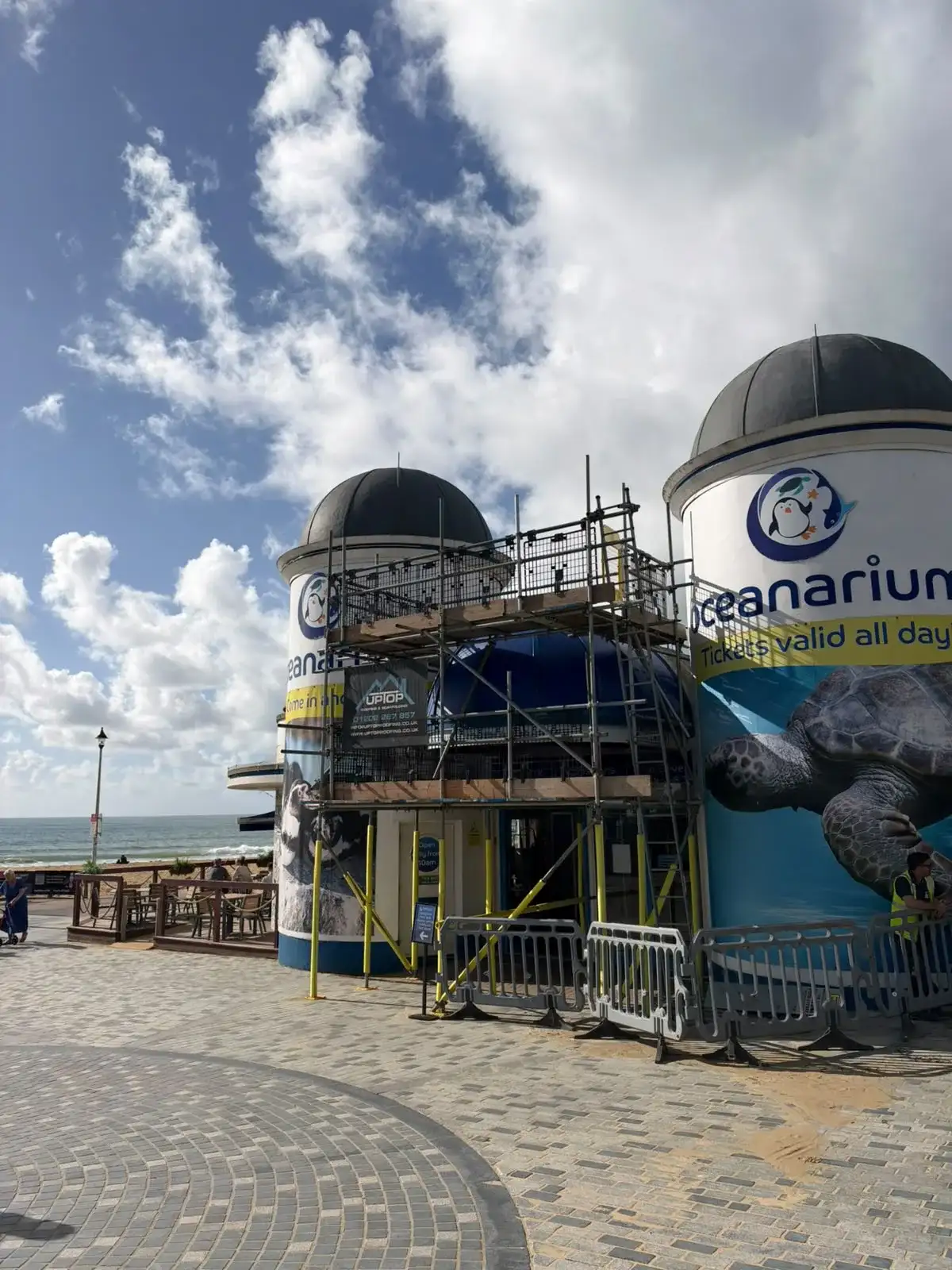
Pedestrian Gantries & Walkways
Pedestrian Gantries & Walkways address the need to move people beside or beneath construction activity without treating the work area as an ordinary footpath. A gantry may combine a defined route with overhead protection, but its precise duty must be specified. Up Top Scaffolding can discuss the scaffold element with the contractor controlling the site, including projects around busy entrances in Poole, Bournemouth and Christchurch where public access is a central consideration.
- Free QuoteTell us about your project
- Fully InsuredScaffolding cover
Get a Free Quote
UP TOP SCAFFOLDING
Begin with the people using the route
Map the route that pedestrians actually need, including entrances, crossings and connections beyond the scaffold. Consider wheelchair users, pushchairs, people with reduced vision and visitors unfamiliar with the building. Clear width and headroom have to be agreed for that route, rather than inferred from the gap between scaffold standards. Thresholds, lighting, signs and surface condition also affect whether a temporary route is practical throughout the working day.
Pedestrian Gantries & Walkways questions, answered.
Straight answers from the Up Top Scaffolding team before you arrange a survey or quote.
Ask us anythingIs every scaffold above a pavement a pedestrian gantry?
No. A gantry's route and protection duty must be specified. Ordinary access scaffolding above a pavement should not be assumed to provide the required overhead protection.
Can an entrance remain open during gantry erection?
That depends on the erection method and the risks to people nearby. Temporary closure or a controlled alternative route may be required even where the completed route will remain available.
Who arranges permission for work over the pavement?
Agree that responsibility with the scaffold contractor and principal contractor early. The relevant authority sets its own requirements, and installation should not proceed on the assumption that permission is unnecessary.
Can the gantry also be a materials store?
Only where storage is explicitly included in the specified duty. Added material can change the loading and the risk to the route below, so it must not be assumed from available deck space.
Agree what overhead protection means
A covered gantry is more than a boarded access platform positioned above a pavement. The proposed protection needs a defined relationship to the operations overhead, including expected material risks and any impact duty. The contractor must still control falling objects at source and assess whether closures or exclusion are necessary. A roof to the route does not automatically protect against every event, and an ordinary scaffold should not be presented as protection from building collapse. In occupied premises, ask the building operator to review the proposed route before installation so accessibility and everyday opening arrangements are considered alongside construction logistics.
Coordinate survey, design and installation
At survey stage, Up Top can review the frontage and the scaffold requirements supplied by the principal contractor. The route and protection specification should then inform the design, supporting positions and planned erection method. Agree any temporary diversion before installation and keep people clear of erection activities. Handover needs to identify the route's permitted use and restrictions. Inspection, maintenance and a controlled strike arrangement are essential parts of keeping the access available safely.
Plan around entrances and deliveries
A shop doorway, residential entrance or attraction may remain in use while the building is scaffolded. Identify door swings, evacuation routes and peak arrival periods before placing supports or access gates. Deliveries and waste removal should not routinely force pedestrians into a traffic lane or an unprotected work area. Where an unavoidable interruption is planned, agree who controls the closure and how the alternative route is communicated to the building operator and other affected parties.
Permissions and changing conditions
Work affecting a pavement or highway may require permission from the relevant authority, together with conditions governing the arrangement. Those requirements are specific to the location and should be checked before installation. Damage, loose coverings, weather or changes above the route may require reassessment. The responsible parties should agree inspection and reporting arrangements so a defect can be addressed promptly, rather than leaving a route open because it was suitable at the first handover.
Choose public access rather than site-only access
For a route intended for workers within a controlled site, see Access Walkways. Scaffold Hoarding concerns separation at the boundary, while Facilities Management considers occupied premises. Our Oceanarium case study shows access around an entrance that remained open to visitors during the works. Tell us about the proposed route at your Poole, Bournemouth or Christchurch site using the quote form.
Verified Feedback
What Our Clients Say
Read verified reviews from customers across Dorset & Hampshire.