
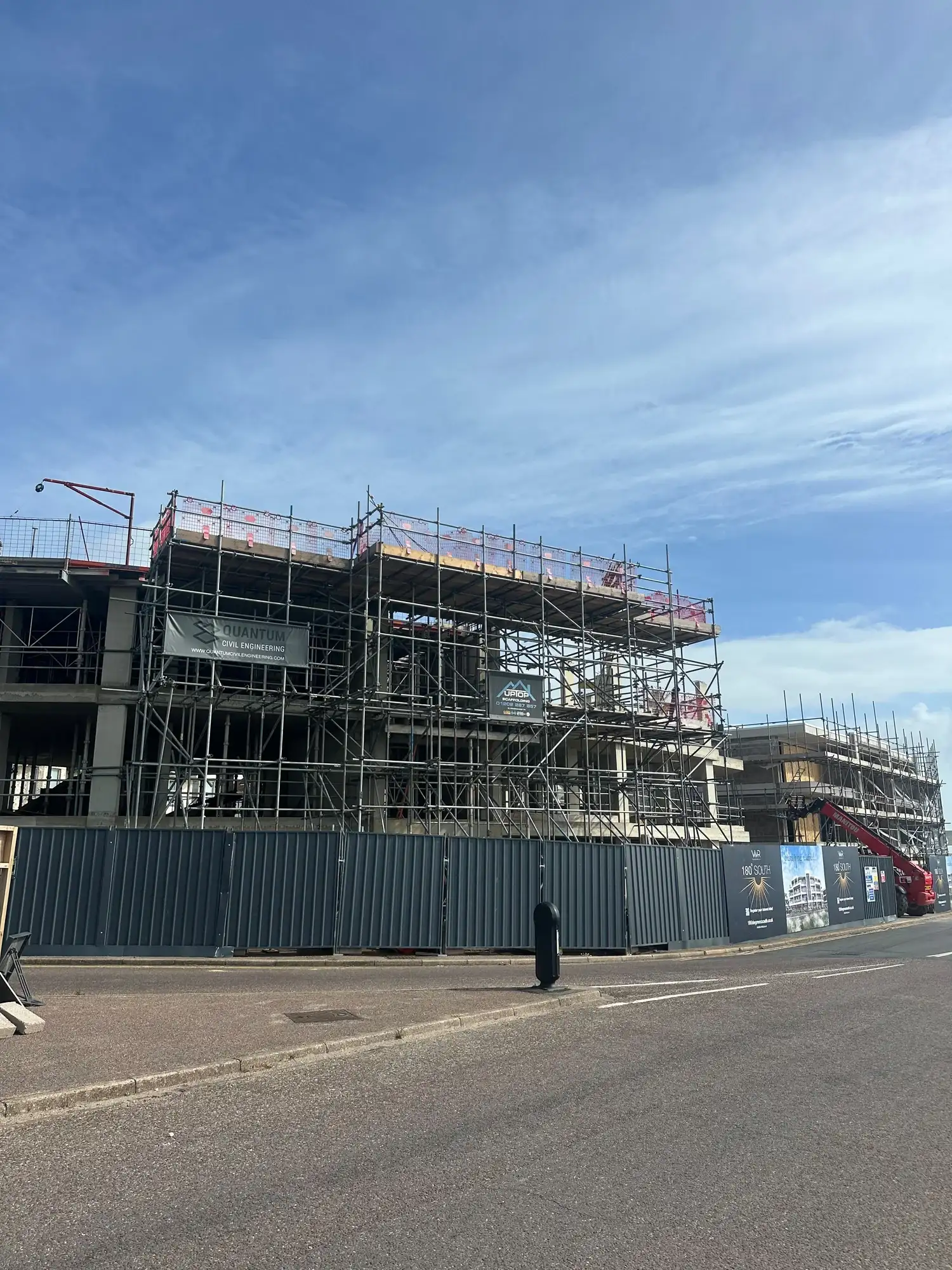
Support Scaffolding
Support scaffolding is considered where temporary works must carry or restrain an agreed load while a building is repaired, altered or constructed. That is a different duty from ordinary access scaffolding. Discuss the support requirement and the engineer's information with Up Top Scaffolding so the temporary works and the contractor's working access can be considered together for your Poole or Dorset project.
- Free QuoteTell us about your project
- Fully InsuredScaffolding cover
Get a Free Quote
UP TOP SCAFFOLDING
Establish what needs supporting
The enquiry should identify the building element, the reason support is needed and the stages during which the temporary arrangement will be in use. Supporting a floor during repairs, retaining a section of masonry and providing access beside a weakened structure are not the same task. Each needs a clear specification of the intended duty.
Load paths matter throughout the arrangement. A component beneath the work may appear substantial, but its role cannot be assessed without understanding the supported loads, connections, stability and bearing conditions. The selection of temporary support should therefore follow competent design information rather than an assumption that an access scaffold can also hold up the building.
Support Scaffolding questions, answered.
Straight answers from the Up Top Scaffolding team before you arrange a survey or quote.
Ask us anythingCan ordinary access scaffolding support a building as well?
Only if that additional duty has been specifically designed and agreed. An access scaffold is not automatically a structural support system, regardless of how substantial it appears beside the building.
What is the difference between support scaffold and dead shores?
Support scaffolding is a broad enquiry about temporary load support or restraint. Dead shores describe a particular vertical support arrangement. The appropriate system depends on the structural task and the designer’s specification.
Can the supported element change during the project?
Any change in the loads, building condition or work sequence needs review through the temporary works process. Do not move supports or continue a changed operation on the assumption that the original scheme still applies.
When should support scaffolding be struck?
After the agreed release requirements have been met, including the relevant confirmation about permanent works. Removal is a designed stage of the operation and needs coordination with the responsible contractor and designer.
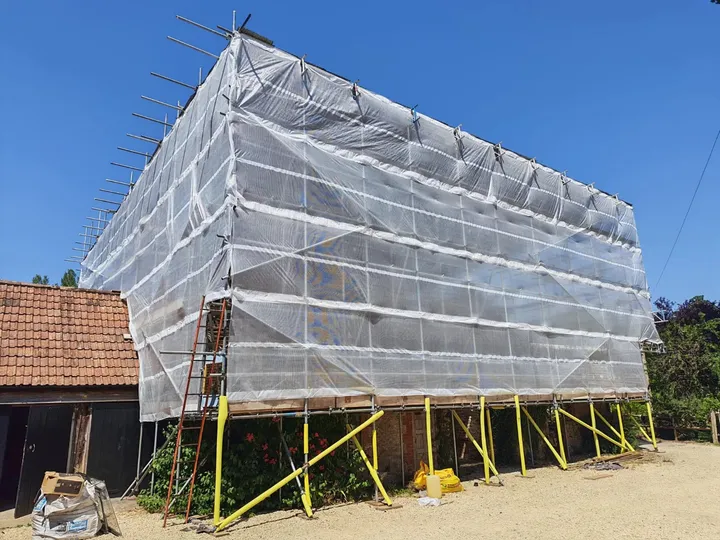
Discuss your site in Dorset or Hampshire
Our Poole base serves projects in Bournemouth, Christchurch and the surrounding Dorset and Hampshire area. Share the site address and the work you need to reach so we can consider the access arrangement for your project.
Coordinate support with refurbishment work
Alterations can change the way an existing structure behaves as work progresses. Removing a wall, exposing a beam or replacing a roof member may create temporary stages that differ from both the original building and the finished design. The project team needs to explain those intermediate stages as well as the intended final result.
Our Sherborne refurbishment case study records shoring alongside a birdcage and temporary roof. It demonstrates that support and access can appear within the same project, while retaining distinct purposes. Your proposed scheme still needs its own engineering assessment, responsibilities and installation checks; an example from another building does not establish a suitable solution for yours.
Agree design, checks and hold points
We discuss the scaffold and support enquiry with the contractor and the people responsible for the temporary works. The information should establish who designs and checks the arrangement, the support and foundation conditions, permitted loads and the stages at which work may proceed. These responsibilities should be resolved before installation is treated as a booking alone.
Erection follows the agreed specification and sequence, with checks before the support takes its intended duty. Access for inspection and any monitoring requirements need to remain practical during the works. Changes in the building or construction method should be reviewed before the scaffold is altered. Release and striking follow the agreed acceptance process for the permanent work, rather than taking place simply because another trade wants the space back.
Distinguish related temporary works
Dead shores provide a particular form of vertical support, while façade retention addresses the stability of a retained external wall. Access ramps and work platforms have different duties again. Identifying the required function at the start helps the right information reach the designer and avoids choosing equipment before the problem has been properly defined.
During hire, users should not remove components, adjust supports or add material storage without review. Movement, damaged bearings or unexpected changes in the supported building need prompt communication through the site controls. A support arrangement remains an active part of the construction method until it has been formally released and removed.
Related access for your project
Review dead shores scaffolding, birdcage scaffolding, propping and access ramps and façade retention when defining the temporary works scope.
Verified Feedback
What Our Clients Say
Read verified reviews from customers across Dorset & Hampshire.
Request a support scaffolding quote
Send photographs, the proposed work dates and any available drawings with your enquiry. Tell us about access restrictions and the intended hire period. Use the quote form to discuss the next step for your site.