
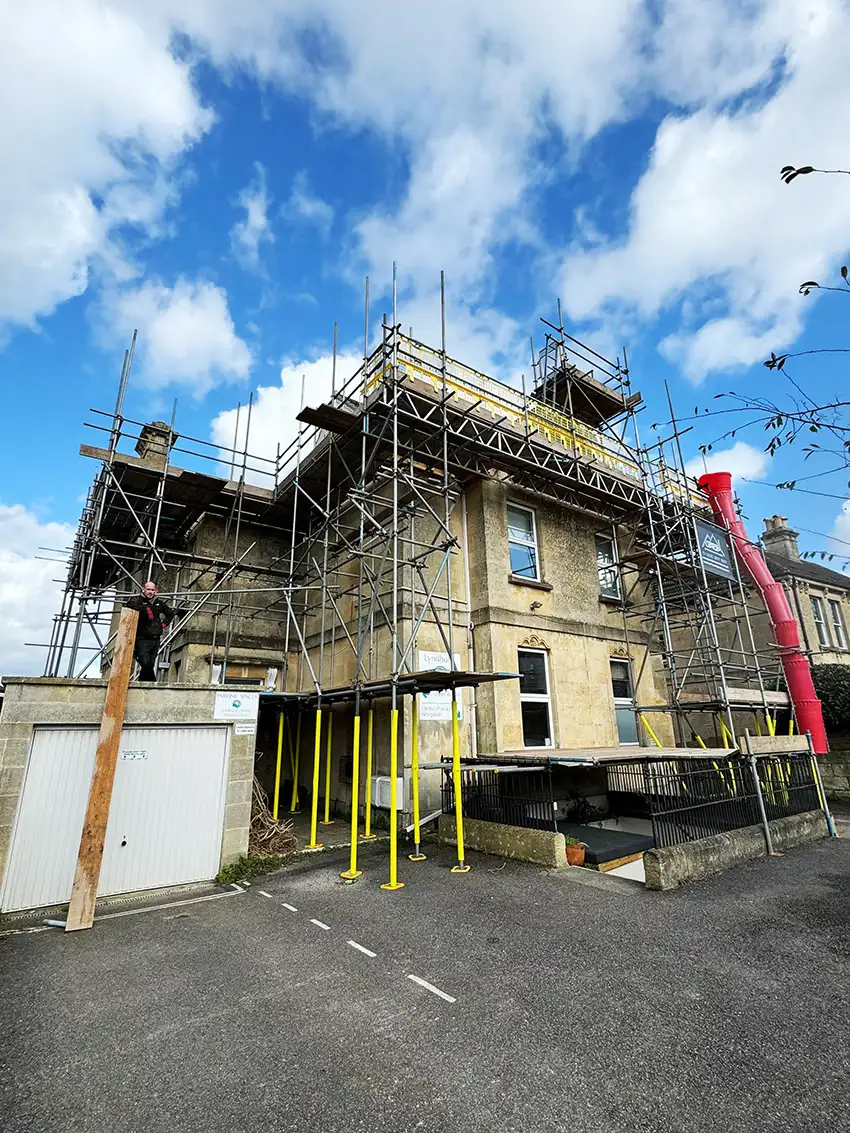
Rubbish and Safety Chutes
Rubbish and safety chutes provide a planned route for suitable waste to travel from a working level to a controlled collection point. The chute, scaffold support and receiving area need to be arranged as one waste-handling system. Up Top Scaffolding can discuss chute requirements alongside access for building works in Poole, Bournemouth and the wider Dorset area.
- Free QuoteTell us about your project
- Fully InsuredScaffolding cover
Get a Free Quote
UP TOP SCAFFOLDING
A controlled route for the agreed waste
A chute should be selected around the material being removed, its size and the loading method. It is not an invitation to drop every type of waste from height. Heavy, sharp or oversized items may be unsuitable for the equipment and need a separate handling method agreed by the contractor managing the work.
The term safety chute describes controlled disposal, not a platform or net that catches falling workers. People working at the loading point still need suitable access and edge protection. A chute can also create dust, noise and impact at its discharge, so its position needs consideration beyond the space occupied by the vertical sections.
Rubbish and Safety Chutes questions, answered.
Straight answers from the Up Top Scaffolding team before you arrange a survey or quote.
Ask us anythingCan every kind of building waste go down a chute?
No. Suitable materials and size limits depend on the selected equipment and operating method. Tell us what is being removed so unsuitable waste can be identified and a separate handling route planned.
Can the chute be fitted after the scaffold is handed over?
A later installation needs review of the scaffold supports, loading points and discharge area. It should be arranged through the scaffolding team rather than attached informally by another contractor.
Who manages the skip and chute discharge area?
Agree that responsibility with the contractor controlling the site. The collection point, exclusion area and skip changes need coordination throughout use, not only when the chute is first installed.
What should happen if the chute becomes blocked?
Stop using it and follow the agreed equipment maintenance procedure. Do not continue adding waste, climb the chute or remove sections without competent control of the affected area.
Discuss your site in Dorset or Hampshire
Our Poole base serves projects in Bournemouth, Christchurch and the surrounding Dorset and Hampshire area. Share the site address and the work you need to reach so we can consider the access arrangement for your project.
Roof repairs and strip-out logistics
Chute enquiries often arise where materials are being removed from upper levels during roofing or refurbishment. The contractor needs to identify each loading point and the likely volume of waste, together with the position and replacement access for the skip or other receiving container. Those details can affect the layout of the scaffold and ground-level controls.
Our existing scaffold photographs include a red segmented chute beside a stone building. They demonstrate the visible form of a chute arrangement, but the equipment and waste requirements still need to be agreed for each project. A similar building height does not establish that the same chute configuration or discharge location will work on another site.
Coordinate supports, delivery and removal
The enquiry should include the working heights, waste type, loading positions and available collection area. We discuss the chute interface with the scaffold design and the equipment supplier's requirements. Supports and connections must suit the proposed arrangement; a chute should not be attached later as an unreviewed addition to an access scaffold.
Installation is coordinated with access below and around the discharge area. The loading points and scaffold are checked before use, with the responsible contractor understanding the equipment limits and inspection arrangements. During the works, damaged sections, blockages and changes to the receiving area need controlled attention. Removal is planned after waste disposal no longer needs the chute, while preserving any scaffold access required for finishing work.
Keep the discharge area under control
The receiving zone needs to be kept separate from pedestrians, residents and vehicle movements that could place someone near falling material. The skip position must also remain compatible with the chute outlet. Moving the container without reviewing that relationship can leave waste discharging somewhere it was never intended to go.
Do not add improvised loading openings or climb a chute to clear a blockage. The selected equipment needs an agreed operating and maintenance method, with the work stopped if it cannot be used as intended. Hazardous waste and asbestos need their own specialist controls; a scaffold chute is not evidence that those materials may be handled through it.
Related access for your project
Combine waste access planning with chimney stack scaffolding, traffic management and logistics and screen scaffolding and protection. Demolition contractors should set out their waste-control requirements.
Verified Feedback
What Our Clients Say
Read verified reviews from customers across Dorset & Hampshire.
Request a rubbish and safety chutes quote
Send photographs, the proposed work dates and any available drawings with your enquiry. Tell us about access restrictions and the intended hire period. Use the quote form to discuss the next step for your site.