
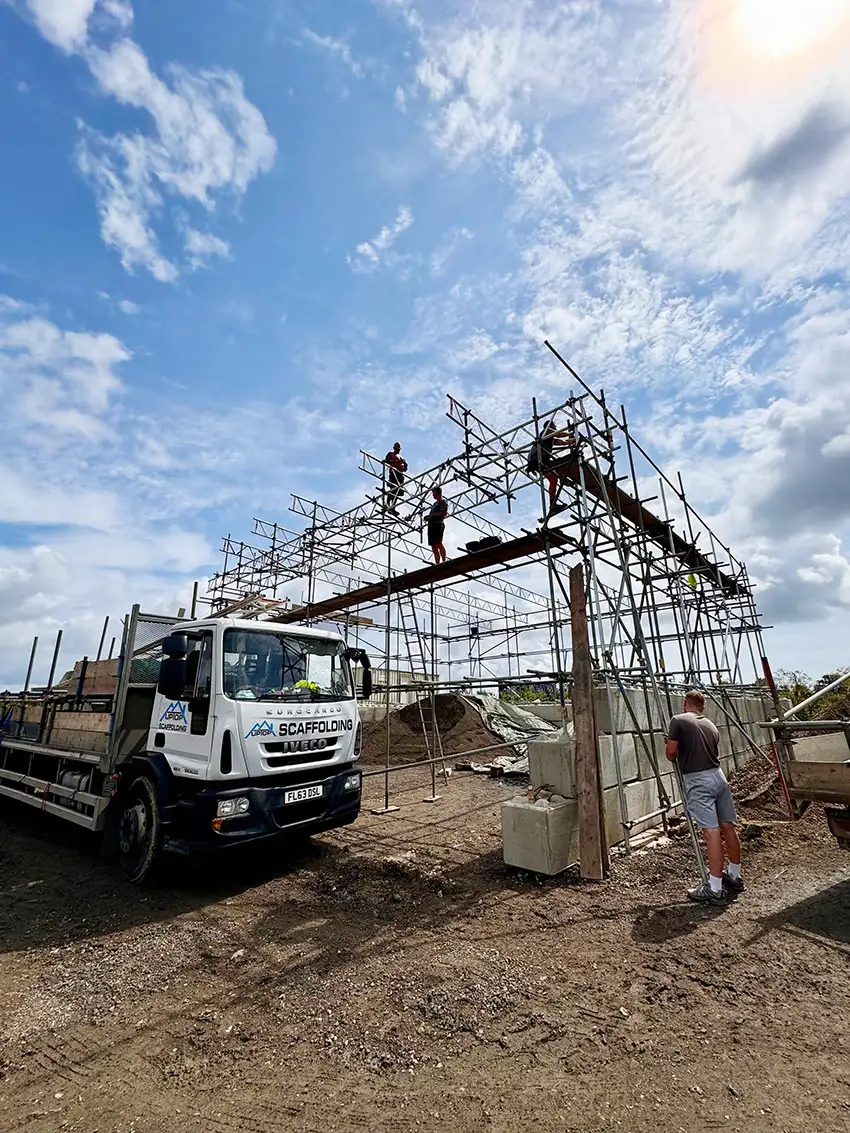
Patented Scaffolding
Patented Scaffolding is commonly used as a broad description for proprietary access equipment with manufacturer-specific connections and components. It is not one universal scaffold type or a guarantee of suitability. Up Top Scaffolding can discuss the working task, building geometry and programme with clients in Poole and the surrounding area, then establish whether an available proprietary system or a tube-and-fitting arrangement is the appropriate option to assess.
- Free QuoteTell us about your project
- Fully InsuredScaffolding cover
Get a Free Quote
A product name does not describe the complete scaffold
Proprietary systems can use prefabricated frames or modular components to form working platforms. Their connections, bracing, deck units and access parts are designed to work as a defined assembly. The details vary between manufacturers, so two products that look similar cannot simply be treated as interchangeable. The relevant instructions and verified component combinations matter more than the general label used in an enquiry.
The word patented also does not tell a client whether a current patent exists, which configuration is proposed or what the scaffold can carry. Ask for the system and the intended arrangement to be identified clearly. This helps the designer, installer and user work from the same assumptions, instead of relying on a marketing term that may mean different things to different people.
Patented Scaffolding questions, answered.
Straight answers from the Up Top Scaffolding team before you arrange a survey or quote.
Ask us anythingDoes patented scaffolding mean one particular brand?
No. The term is used broadly for proprietary equipment. The actual manufacturer, system family and proposed configuration should be identified before the equipment is assessed or specified.
Can components from different proprietary systems be mixed?
Not on appearance alone. Compatibility needs to be established through the applicable manufacturer information and competent assessment. Similar dimensions or connections do not prove that components work together.
Will a proprietary system always avoid a bespoke design?
No. A standard configuration may cover some arrangements, but unusual spans, loading, ties or added features can require site-specific design. Manufacturer guidance has defined limits.
What if my tender specifies a system Up Top does not use?
Include the specification at the outset. Availability, competence and any permitted alternative can then be discussed before a quotation or programme is agreed.
Where a proprietary arrangement may suit
Regular elevations, repeat bay sizes and a programme with defined working levels can make a modular approach worth considering. Manufacturer-designed decks and access units may provide a consistent arrangement where the building and foundations suit the system. Irregular corners, unusual spans or sensitive façades can still need additional design work or a different type of scaffold rather than forcing standard parts into a poor fit.
At the survey stage, Up Top reviews the required reach, platform loading, footprint and delivery constraints. We also need to establish which system is available for the proposed work. For comparison, tube and fitting scaffolding offers a different approach to adapting around building shapes, while the Kwikstage page explains one named system family without implying that it is automatically specified.
Manufacturer guidance and site-specific design
A system scaffold assembled within an applicable standard configuration must still follow the relevant manufacturer guidance. Departures, added features and unusual loading can require a competent designer to assess the proposal. A proprietary connection does not remove the need to consider foundations, ties, wind or the effect of sheeting. The work specification must be checked against the arrangement that is actually being supplied.
Once the scope is agreed, delivery and erection need a controlled sequence using the appropriate components. The completed scaffold is inspected before use, with information about permitted loading and changes communicated at handover. Ongoing inspections and any adaptations must be arranged through competent people. Dismantling follows a planned method that respects the stability of the remaining structure as components are taken away.
Specify the task before committing to a system
If a tender names proprietary equipment, send the specification with your enquiry and identify whether substitutions can be considered. Property developers may also need a consistent approach across several plots or phases, but consistency must not hide differences in ground conditions or building height. Bespoke design packages can help resolve interfaces that fall outside a standard system arrangement.
Our Poole team can review enquiries for Bournemouth and Christchurch as well as the wider region. Provide the proposed working levels, material loads and any named-system requirement. The next step is to confirm a deliverable scope and suitable equipment, rather than assume that every proprietary scaffold described online is held in stock or appropriate for your site.
Verified Feedback
What Our Clients Say
Read verified reviews from customers across Dorset & Hampshire.