
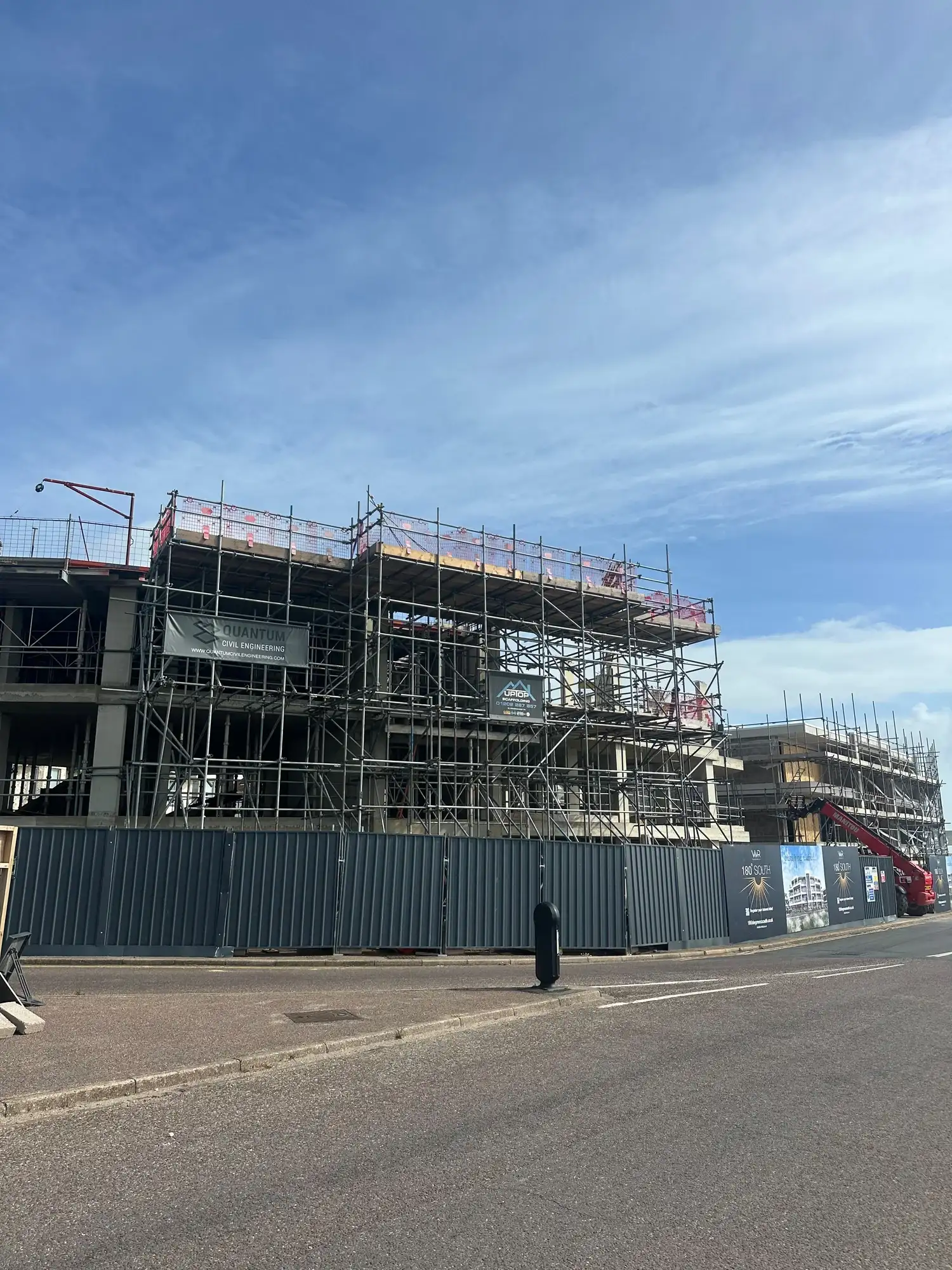
Heavy Duty Loading Bays
Heavy Duty Loading Bays provide a designated scaffold position for receiving and transferring materials between lifting equipment and the working lifts. For a builder or demolition contractor, the value lies in a planned transfer point rather than treating any boarded area as storage. Up Top Scaffolding's published Southbourne case study records a loading bay erected from approved design drawings. Any new loading-bay requirement in Poole must be specified for its actual loads and handling method.
- Free QuoteTell us about your project
- Fully InsuredScaffolding cover
Get a Free Quote
UP TOP SCAFFOLDING
Weight is only part of the loading brief
Tell us the heaviest item, the size of each pallet or container and the number that may be present at once. Concentrated loads, unevenly distributed packs and the movement needed to unload them all influence the arrangement. Include the lifting equipment and its approach, not just the total material quantity for the project. A delivery schedule that places several loads on the platform together can demand a different solution from one-at-a-time transfer.
Heavy Duty Loading Bays questions, answered.
Straight answers from the Up Top Scaffolding team before you arrange a survey or quote.
Ask us anythingWhat loading capacity can I request?
Give us the actual load information rather than choosing a generic capacity. The proposed bay must be checked for its layout, support, connections and intended handling duties before a rating is agreed.
Can two pallets be landed on the bay at once?
Only where their combined weight and distribution are within the specified arrangement. The agreed duty may limit both the number of loads and where they can be placed.
Does the loading bay include the lifting operation?
The bay and the lifting operation are separate requirements. Agree responsibility for lifting equipment, planning, operators and delivery control, alongside the scaffold landing arrangement.
Can the bay be moved to another lift mid-project?
A relocation needs an authorised alteration and appropriate checks. The new height and connections can change the scaffold's behaviour, so it should not be treated as a simple platform move.
Arrange the landing point around the site
A loading bay needs room for the delivery vehicle or lifting operation, a suitable gate arrangement and a practical route from the landing position to the work. Consider how loads will be broken down and whether workers need to pass each other while materials are handled. The bay must not obstruct required scaffold access or rely on someone removing guardrails without an authorised method. Changes to crane or telehandler approach should be discussed before deliveries are diverted. Include packaging, stillages and any handling equipment in the declared load, and identify the person who will control access while each delivery is landed.
From loading information to handover
During survey and planning, Up Top can review the intended landing height, available support and connection to the surrounding scaffold. The duty and any bespoke design must be agreed before erection. The installed arrangement is then checked against the appropriate information and handed over with its limitations made clear. Agree who controls use, maintains required inspections and requests alterations. Strike should be coordinated with remaining deliveries so that an unavailable bay is not assumed to be operational.
Keep materials within the specified duty
The loading limit must be understood by everyone arranging deliveries and working on the bay. Do not substitute estimates for confirmed pallet weights, and do not add extra stored material simply because space appears available. A loading bay is not a lifting appliance, and the lifting operation requires its own planning and controls. Keep gates and edge protection used as intended, and prevent unauthorised changes to create a larger opening or a shortcut for long components.
Differentiate demolition waste from clean deliveries
A bay intended for new construction materials should not automatically receive waste containers, falling rubble or dynamic impact from a demolition process. Such uses need a specific brief, including handling and containment. Inspect and report damage following contact from lifting equipment or a dropped load. The Southbourne loading-bay project provides a genuine example of work from approved drawings, without establishing a universal capacity for other sites.
Connect the bay with the wider programme
Traffic Management & Logistics addresses the delivery interface, while Property Developers may need several work packages to share a defined landing area. Scaffolding for Builders explains how access changes through the build. For a loading-bay enquiry in Poole, Bournemouth or Christchurch, include load weights, dimensions, lifting method and planned installation date so the requirements can be reviewed together.
Verified Feedback
What Our Clients Say
Read verified reviews from customers across Dorset & Hampshire.