
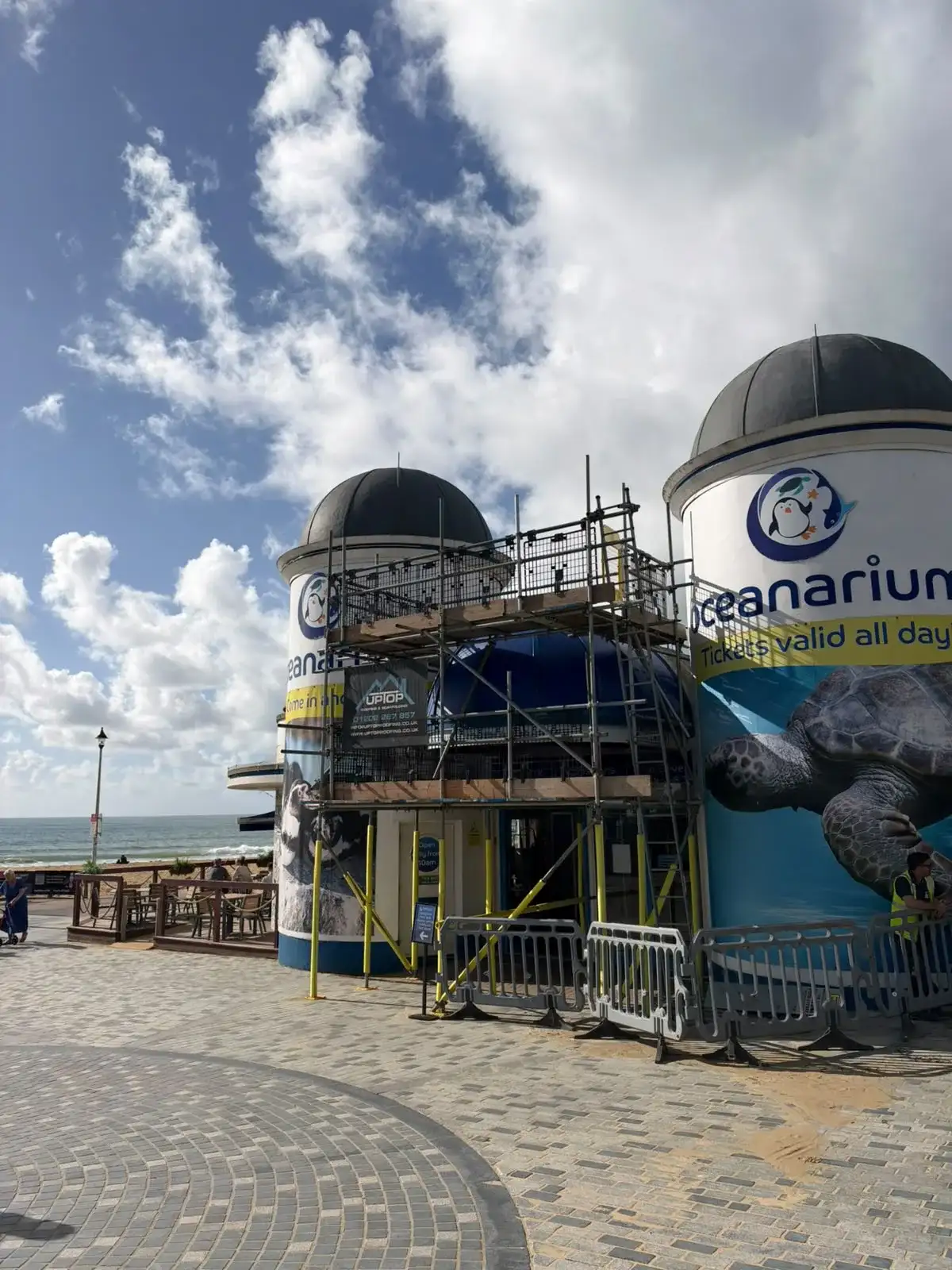
Debris & Protection Fans
Debris & Protection Fans are projecting structures intended to intercept specified falling material before it reaches a lower area. Their purpose is different from a working platform or a simple scaffold sheet. A fan needs a defined duty, suitable support and a plan for dealing with collected material. Up Top Scaffolding can review protection requirements with the contractor responsible for works above a boundary, entrance or adjoining work area in Poole and the surrounding region.
- Free QuoteTell us about your project
- Fully InsuredScaffolding cover
Get a Free Quote
UP TOP SCAFFOLDING
Establish the falling-material risk first
A protection fan should form part of a wider prevention strategy. Keeping materials secured, controlling handling and excluding people from hazardous areas remain important even when an interception structure is proposed. The design brief needs to identify what might fall, from where, and during which operation. Small fragments, tools and heavy masonry impose different demands. Do not assume that a fan sized to protect an access route is intended to catch demolition rubble.
Debris & Protection Fans questions, answered.
Straight answers from the Up Top Scaffolding team before you arrange a survey or quote.
Ask us anythingCan a protection fan be used as a working platform?
Only if that use is explicitly included in its design and handover. A surface intended to intercept material may not be suitable for personnel, storage or routine access.
Does a fan remove the need for an exclusion zone?
Not automatically. The protection arrangement must be assessed alongside the operations above and the people below. Exclusion and material-control measures may still be necessary.
What happens after heavy material lands on the fan?
Report the incident and follow the agreed restriction and inspection process. The fan and its supporting scaffold may need assessment before the affected area or operation is reopened.
Can debris simply be left on the fan until dismantling?
That should not be assumed. Accumulation changes the loading and may create secondary falling risks, so clearance arrangements and limits belong in the original protection plan.
Projection and support need a deliberate layout
The fan's reach, slope and relationship to the workface affect the area it can protect. Its reactions must pass safely through the scaffold and into adequate supports or ties. Entrances, vehicles and neighbouring structures can limit where those supports go. Wind also acts on boarded or sheeted surfaces. These questions need to be resolved before erection, rather than deciding on a projection simply because it appears to clear the pavement when viewed from the ground. Share the proposed inspection and clearance arrangements with adjacent trades so nobody mistakes the intercepted material for a suitable place to stack tools or supplies.
Prepare a workable installation brief
At the initial survey, Up Top can discuss working heights, the route below and the material-handling method. Where a fan is required, its design responsibility, duty and connections should be established alongside the access scaffold. Agree the erection sequence and any temporary closures before installation. Handover should describe restrictions clearly, including how the structure is inspected and who may authorise changes. Strike follows a planned sequence that keeps people clear of material or components being removed.
Allow for inspection and controlled clearance
Collected debris can become a new loading or falling-object problem if it is left to accumulate. The project needs a safe clearance method and an agreed response when the fan has been struck by material. Access to inspect or clear it should be part of the plan, rather than a reason for someone to climb onto an unapproved surface. A visible platform is not necessarily a walkway, and alterations must remain under competent control.
Public protection extends beyond the fan
Where work affects a highway or publicly accessible area, discuss permits and conditions with the relevant authority and the party managing the site. A fan does not remove the need for suitable barriers, controlled work methods or appropriate exclusion. Scaffold safety inspections should account for changes and events likely to affect stability. Falling-material risks must also be considered during erection and dismantling, when the final protective arrangement may not yet be available.
Separate interception from access and netting
For an enclosed route beneath works, investigate Pedestrian Gantries & Walkways. Safety Netting has a different specified function, and Roofing Contractors should describe the actual handling risks rather than requesting generic protection. The Oceanarium scaffold demonstrates the need to coordinate working access with a visitor entrance and public movement below. Send your project details for Poole, Bournemouth or Christchurch through the quote form.
Verified Feedback
What Our Clients Say
Read verified reviews from customers across Dorset & Hampshire.